
Background
Universal Blue builds customizable Linux operating systems using cloud native tooling. Bazzite, their most popular image, targets Steam Deck and handheld gaming PC users. Bluefin handles developer workstations, Aurora serves KDE users, and uCore covers servers and cloud deployments. All four target a polished operating system experience without traditional setup overhead.
In early 2025, Universal Blue had 50,000 weekly active users, 60,000 live instances checking in for updates, over 30 million container image pulls, and 2 petabytes of data served via installs. Bazzite had become the most popular gaming-focused Linux image on GitHub. The Discord community reached 25,000 members across multiple servers, and by the end of 2025, Bluefin had grown to 250 active forks and ranked alongside major distributions in Homebrew usage stats.
Universal Blue's technical infrastructure handled growth through daily automated builds, atomic image updates, and conventional commit bots that enforced standards across 139 repositories. Community support could not keep up.
01 / Universal Blue at Scale
50K
Weekly Active Users
early 2025
60K
Systems Checking In
daily
30M+
Container Image Pulls
total
2PB
Data Served via Installs
petabytes
The challenge
Three maintainers tried to keep up. Their Discord channels became so active that Bluefin and Aurora had to split into separate servers to stay readable. The project's Discourse forum posted a notice:
We do not triage the posts a lot. Please refer to GitHub/Reddit/Discord.
Average time to first response on support threads reached 42 hours. Industry research via "Understanding the Time to First Response In GitHub Pull Requests" found that time-to-first-response explains 58.7% of the variance in pull request lifetime, and slow responses directly predict whether contributors stay or leave.
Many incoming questions were repetitive, asking about boot times or rebasing between OS versions. Universal Blue's answers were well documented, but scattered across GitHub, Discord, Discourse, and their documentation site. The StackExchange model had worked when communities clustered around one Q&A platform. Universal Blue's knowledge no longer lived in one place.
Sixty percent of Bluefin users activated Developer Mode, which meant responses required deep technical knowledge of the operating system. And online sources were often outdated, recommending anti-patterns that no longer apply to modern Linux.
02 / Response Time: Before and After
Before Dosu
42h
hours to first response
Real average closer to 4 days.
3 maintainers. 50K weekly users.
After Dosu
12m
minutes to first response
Best-in-class projects: <1 hour.
Universal Blue: under 15 min.
Time-to-first-response explains 58.7% of variance in PR lifetime
Slow responses directly predict whether contributors stay or leave. Universal Blue moved from a four-day average to under fifteen minutes.
Why generic AI did not work
The Universal Blue team considered integrating with a foundational model or generic AI solutions. None of them knew about Bluefin's specific configurations, the rebasing process between Universal Blue image versions, or which hardware quirks the community had already documented fixes for.
I'm trying to disassociate from "one chat will know everything on the planet" to "this is what my project recommends and is the expert." Dosu preserves my brand by ensuring official documentation always takes priority.
- Jorge Castro, Co-founder of Universal Blue
Dosu pulls in a project's documentation, issue history, and prior community discussions to build project-specific context. When a user opens a new issue, Dosu references existing project knowledge rather than offering generic Linux guidance. It detects duplicate issues, auto-labels them, and suggests documentation updates when it finds gaps.
Universal Blue started with smaller repositories and expanded once results came in. Other open source communities, including TriliumNext and Apache Superset, had already shown how Dosu could scale community knowledge.
03 / Project-Scoped Knowledge vs. Generic AI
Dosu Knowledge Layer
All project knowledge unified into a single searchable context. Official documentation takes priority over generic guidance.
Dosu for Universal Blue
Knows Bluefin-specific configurations, the rebasing process, and hardware quirks already documented by the community. References existing knowledge, detects duplicates, and surfaces relevant fixes before maintainers need to step in.
Generic AI
No project-specific context for Universal Blue versions or known fixes. Risks suggesting outdated anti-patterns that do not match modern image-based Linux workflows.
Results
Universal Blue deployed Dosu across six repositories.
Response time
Before Dosu
42h
After Dosu
12m
Improvement
99.5%
The industry average time-to-first-response for open source issues is around two days, and excellent projects manage under an hour. Before Dosu, Universal Blue's average sat closer to four days. After deployment, it dropped to under fifteen minutes.
Volume across repositories
| Repository | Conversations | Total Messages | Dosu Responses | Resolution Rate |
|---|---|---|---|---|
| Bluefin | 1,727 | 8,629 | 900 | 25.9% |
| Bluefin LTS | 673 | 2,527 | 378 | 18.7% |
| Aurora | 255 | 1,131 | 38 | 48.6% |
| Aurora Docs | 226 | 614 | 1 | 6.6% |
| Flatpak Tracker | 203 | 500 | 0 | 85.2% |
| Homebrew Tap | 194 | 506 | 182 | 13.9% |
| Total | 3,278 | 13,907 | 1,499 | — |
Bluefin
- Conversations
- 1,727
- Total Messages
- 8,629
- Dosu Responses
- 900
- Resolution Rate
- 25.9%
Bluefin LTS
- Conversations
- 673
- Total Messages
- 2,527
- Dosu Responses
- 378
- Resolution Rate
- 18.7%
Aurora
- Conversations
- 255
- Total Messages
- 1,131
- Dosu Responses
- 38
- Resolution Rate
- 48.6%
Aurora Docs
- Conversations
- 226
- Total Messages
- 614
- Dosu Responses
- 1
- Resolution Rate
- 6.6%
Flatpak Tracker
- Conversations
- 203
- Total Messages
- 500
- Dosu Responses
- 0
- Resolution Rate
- 85.2%
Homebrew Tap
- Conversations
- 194
- Total Messages
- 506
- Dosu Responses
- 182
- Resolution Rate
- 13.9%
Total
- Conversations
- 3,278
- Total Messages
- 13,907
- Dosu Responses
- 1,499
- Resolution Rate
- —
Resolution is classified automatically based on conversation context. A conversation counts as resolved when the original question has been addressed. The metric is conservative. Conversations where users get their answer and leave without follow-up are never marked resolved, which undercounts actual resolutions in channels like in-app chat.
As of this writing, users and maintainers have opened 3,278 conversations across all six repositories. Each conversation is a single issue, discussion, or chat session. Those conversations generated nearly 14,000 messages, and Dosu produced 1,499 of the responses. In the Bluefin repository, 52% of conversations received an AI-assisted response.
How often Dosu solved the problem depended on the repository. Aurora, with a smaller and more focused user base, reached 48.6%. The Flatpak Tracker, which tends to be more structured, hit 85.2%. Where documentation covered the question domain well, Dosu resolved more. Where it did not, maintainers still needed to step in.
Platform engagement
Dosu's app chat became a key part of how the community gets help. By early 2026, 321 users had interacted with Dosu.
Twenty active community members regularly interact with Dosu. The five most engaged users each log hundreds of events per month, viewing conversations, searching across repositories, and rating Dosu's responses.
What this looks like in practice
Service configuration is one example. Castro has not written a systemd service unit in six months. The team feeds Dosu the systemd and linuxserver.io documentation, along with best practices for both podman and Docker. A user can ask it to set up a Jellyfin server and receive a working configuration. System prompts let the team tailor responses over time based on user reports.
Is Jorge Castro a robot?
In 2011, the Ask Ubuntu community asked, "Is Jorge Castro a Robot?". They could not figure out how one person had time for so much community interaction.
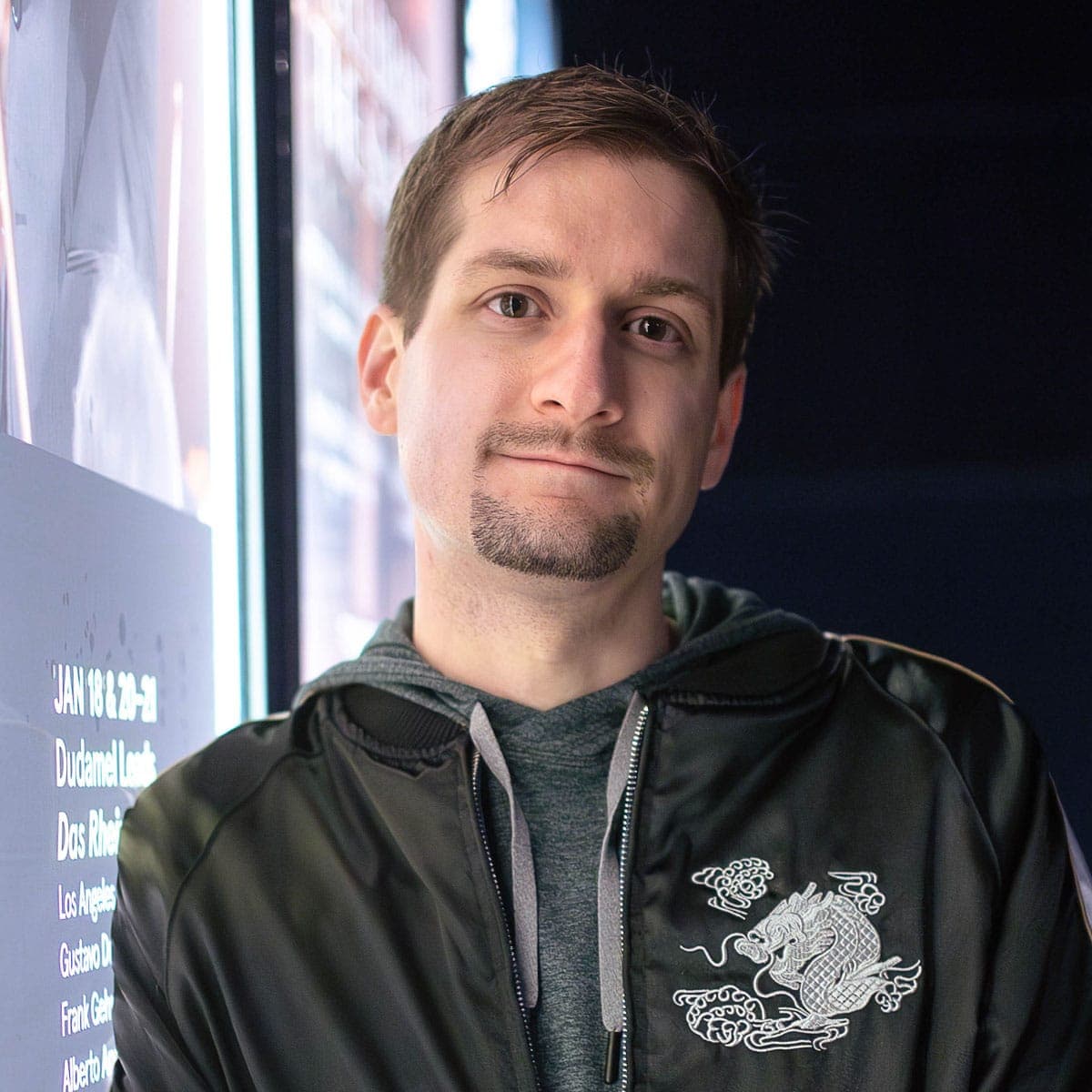
Castro was not (and still is not) a robot. He was a community builder at Canonical who believed that answering questions at scale was worth the effort. That belief in showing up carried through Kubernetes community work at Heptio and VMware, a role as Developer Advocate and End User Lead at CNCF, and co-founding Universal Blue.
The "robot" question captures what Stack Exchange-era community support required: extraordinarily dedicated people who could keep up with millions of users, every day, for years. Castro co-founded the third-largest Stack Exchange site. He knows what it takes to keep a community running at that scale, and when the old model stops working.
I'm literally telling people that the age of tech support, user-to-user, is over. The LLM knows. I cannot compete with this thing.
- Jorge Castro, Co-founder of Universal Blue
The community knowledge already exists, scattered across the same platforms that overwhelmed three maintainers. Dosu does not generate those answers from scratch. It finds the ones the community already wrote, across all six repositories, without a maintainer needing to remember which Discord thread from March had the fix.
What comes after StackExchange
That distinction between doing support and teaching a system to do support shaped Universal Blue's roadmap. The team plans to ship Dosu's MCP server directly in Bluefin, making it the first Linux distribution to let users query project-specific documentation from the terminal. With 50,000 weekly active users already using Dosu, Castro sees Dosu as "a single source of truth trained on the official documentation of everything we ship." The broader vision connects community responses, the operating system itself, the project website, and GitHub issue tracking to a single knowledge layer.
Each Universal Blue release brings hundreds of user questions about rebasing, compatibility, and configuration. In the StackExchange era, those questions would have sat in a queue until someone with the right context found them. Dosu answers them in minutes, letting the team focus on content itself rather than drinking from the firehose.
Instead of doing user support, I train Dosu on the methodology of doing user support. It's not the same thing.
- Jorge Castro, Co-founder of Universal Blue
In 2011, the Ask Ubuntu community examined one person's output and asked whether he was a robot. In 2026, Universal Blue has an actual robot, and maintainers finally have time to build the operating system instead of triaging support threads.
If your support queue looks anything like Universal Blue's did, book a demo to see how Dosu can help. Scattered documentation, repetitive questions, and a team that cannot keep up are not unique to open source. Engineering teams running internal tools and platforms hit the same wall. Join the conversation in Dosu's Discord.